Notes


  • 首页

  • 归档

  • 分类

  • 标签

  • 库

  • 搜索

概要

发表于 2019-01-16 | 分类于 quant | 阅读次数

概要

阅读全文 »

抽奖问题

发表于 2019-01-10 | 分类于 生活 | 阅读次数
奖项 中奖人数 or 权重
1 500
5 100
10 20
50 5
100 1
阅读全文 »

区块tx解析

发表于 2019-01-06 | 分类于 区块链 | 阅读次数
区块链交易数据解析
阅读全文 »

区块共识

发表于 2019-01-04 | 分类于 区块链 | 阅读次数

分布式系统由于引入了多个节点,所以系统中会出现各种非常复杂的情况;随着节点数量的增加,节点失效、故障或者宕机就变成了一件非常常见的事情,解决分布式系统中的各种边界条件和意外情况也增加了解决分布式一致性问题的难度。 节点之间的网络通信收到干扰甚至阻断以及分布式系统的运行速度的差异都是解决分布式系统一致性所面临的难题。

阅读全文 »

Python 部署

发表于 2018-12-11 | 分类于 Linux | 阅读次数

部署脚本备用

阅读全文 »

anti防盗链

发表于 2018-12-09 | 分类于 spider | 阅读次数

图片防盗链

阅读全文 »

WordPress for mac

发表于 2018-11-24 | 分类于 tools | 阅读次数

mamp

阅读全文 »

gunicorn nginx flask supervisor deploy

发表于 2018-11-24 | 分类于 tools | 阅读次数

supervisor

阅读全文 »

AE VAE GAE

发表于 2018-11-19 | 分类于 ml | 阅读次数

AutoEncoder

AE

阅读全文 »

mnist 分类 tensorflow

发表于 2018-11-09 | 分类于 ml | 阅读次数
  • MNIST dataset
  • Tensorflow ValueError: No variables to save from
  • TensorFlow restore model Key Variable not found in checkpoint 这个是我自己的问题🤬未解决 已解决 和 name_scope有关
  • Tensorflow: how to save/restore a model?
1
2
3
4
5
6
7
8
9
10
11
12
13
14
15
16
17
18
19
20
21
22
23
24
25
26
27
28
29
30
31
32
33
34
35
36
37
38
39
40
41
42
43
44
45
46
47
48
49
50
51
52
53
54
55
56
57
58
59
60
61
62
63
64
65
66
67
68
69
70
71
72
73
74
75
76
77
78
79
80
81
82
83
84
85
86
87
88
89
90
91
92
93
94
95
96
97
98
99
100
101
102
103
104
105
106
107
108
109
110
111
112
113
114
115
116
117
118
119
120
121
122
123
124
125
126
127
128
129
130
131
132
133
#!/usr/bin/env python
# -*- coding: utf-8 -*-
"""
@author = 'wyx'
@time = 2018/11/7 15:45
@annotation = ''
"""
from datetime import datetime

import tensorflow as tf
from tensorflow.examples.tutorials.mnist import input_data
from tensorflow.python.saved_model import tag_constants

mnist = input_data.read_data_sets("MNIST_data/", one_hot=True)
save_model_path = 'mnist_model/model.ckpt'


def train():
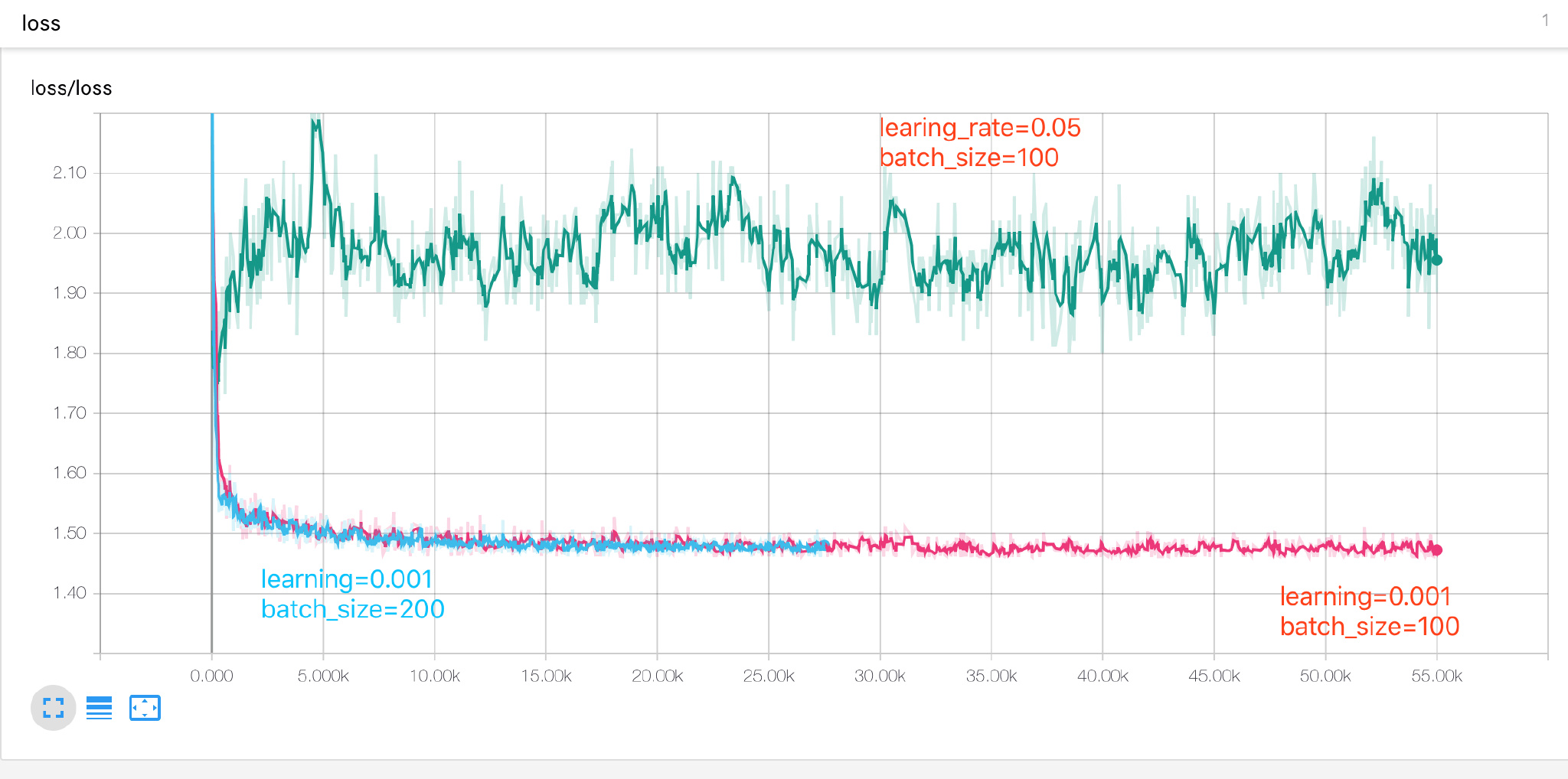
    learning_rate = 0.05
    batch_size = 100
    max_epochs = 100
    num_of_batch = int(mnist.train.num_examples / batch_size)
    now = datetime.utcnow().strftime("%Y%m%d%H%M%S")

    X = tf.placeholder(tf.float32, shape=[None, 784], name='X')
    y = tf.placeholder(tf.float32, shape=[None, 10], name='y')
    print(X.name, y.name)

    W = tf.get_variable(shape=[784, 10], name='weight')
    b = tf.get_variable(initializer=tf.zeros([10]), name='bais')
    tf.summary.histogram("weights", W)
    tf.summary.histogram("biases", b)

    with tf.name_scope('pred'):
        y_pred = tf.nn.softmax(tf.matmul(X, W) + b, name='predict')
        print(y_pred.name)

    with tf.name_scope('loss'):
        loss = tf.reduce_mean(tf.nn.softmax_cross_entropy_with_logits(labels=y, logits=y_pred))
        tf.summary.scalar('loss', loss)
        optimizer = tf.train.AdamOptimizer(learning_rate=learning_rate).minimize(loss)

    with tf.name_scope('acc'):
        correct_prediction = tf.equal(tf.argmax(y_pred, 1), tf.argmax(y, 1))
        accuracy = tf.reduce_mean(tf.cast(correct_prediction, tf.float32), name='acc')
        print(accuracy.name)

    merged_summary_op = tf.summary.merge_all()
    init_op = tf.global_variables_initializer()

    saver = tf.train.Saver()

    with tf.Session() as sess:
        sess.run(init_op)

        loss_avg = 0
        writer = tf.summary.FileWriter('mnist/{}'.format(now), sess.graph)
        for epoch in range(max_epochs):
            for i in range(num_of_batch):
                batch_x, batch_y = mnist.train.next_batch(batch_size)
                summary_str, _, l = sess.run([merged_summary_op, optimizer, loss], feed_dict={X: batch_x, y: batch_y})
                loss_avg += l
                global_step = epoch * num_of_batch + i
                writer.add_summary(summary_str, global_step)

                if global_step % 100 == 0:
                    print('Epoch {}: {} save model'.format(epoch, i))
                    # save model in halfway
                    saver.save(sess, save_model_path, global_step=global_step)

            loss_avg /= num_of_batch
            print('Epoch {}: Loss {}'.format(epoch, loss_avg))

        print(sess.run(accuracy, feed_dict={X: mnist.test.images, y: mnist.test.labels}))
        saver.save(sess, save_model_path)
        tf.saved_model.simple_save(sess, 'simple_model', inputs={
            'X': X,
            'y': y,
        }, outputs={
            'pred': y_pred,
        })


def predict(mode=1):
    def _predict():
        graph = tf.get_default_graph()
        X = graph.get_tensor_by_name('X:0')
        y = graph.get_tensor_by_name('y:0')
        accuracy = graph.get_tensor_by_name('acc/acc:0')
        print(sess.run(accuracy, feed_dict={X: mnist.test.images, y: mnist.test.labels}))

        pred = graph.get_tensor_by_name('pred/predict:0')
        import matplotlib.pyplot as plt
        i = 90
        img_orign = mnist.train.images[i]
        img = img_orign.reshape((28, 28))
        plt.imshow(img, cmap='gray')
        plt.title(mnist.train.labels[i])
        plt.show()
        a = sess.run(pred, feed_dict={X: img_orign.reshape(-1, 784)})
        import numpy as np
        print(np.argmax(a))

    if mode == 1:
        meta_path = 'mnist_model/model.ckpt.meta'
        checkpoint_path = 'mnist_model'
    elif mode == 2:
        # stupid var WTF ValueError: No variables to save
        _ = tf.Variable(0)
        saver = tf.train.Saver()

    with tf.Session() as sess:
        sess.run(tf.global_variables_initializer())
        if mode == 1:
            saver = tf.train.import_meta_graph(meta_path)
            saver.restore(sess, tf.train.latest_checkpoint(checkpoint_path))
        elif mode == 2:
            saver.restore(sess, save_model_path)
        elif mode == 3:
            tf.saved_model.loader.load(sess, [tag_constants.SERVING], 'simple_model')
        _predict()


def check_ckpt():
    from tensorflow.python.tools import inspect_checkpoint as chkp
    chkp.print_tensors_in_checkpoint_file(save_model_path, tensor_name='', all_tensors=True)


if __name__ == '__main__':
    # train()
    predict(mode=3)
    # check_ckpt()

MLP

1
2
3
4
5
6
7
8
9
10
def multi_layer(X):
    n_classes = 10
    with tf.name_scope('layer'):
        l1 = tf.layers.dense(X, 32, activation=tf.nn.relu)
        l2 = tf.layers.dense(l1, 16, activation=tf.nn.relu)
        out = tf.layers.dense(l2, n_classes)
    with tf.name_scope('pred'):
        y_pred = tf.nn.softmax(out, name='predict')
        print(y_pred.name)
    return y_pred

Liner layer

1
2
3
4
5
6
7
8
9
10
11
def liner_layer(X):
    W = tf.get_variable(shape=[784, 10], name='weight')
    b = tf.get_variable(initializer=tf.zeros([10]), name='bais')
    tf.summary.histogram("weights", W)
    tf.summary.histogram("biases", b)

    with tf.name_scope('pred'):
        y_pred = tf.nn.softmax(tf.matmul(X, W) + b, name='predict')
        print(y_pred.name)

    return y_pred
阅读全文 »
1 … 29 30 31 … 43
wyx

wyx

421 日志
40 分类
41 标签
GitHub StackOverflow
© 2018 - 2026 wyx
由 Jekyll 强力驱动
主题 - NexT.Mist